Get in touch
Choose the right channel
General Enquiries
For information, guidance and public enquiries about the Commission.
- info@icrc.gov.ng
- Mon–Fri · 8:00 – 17:00 WAT
Investor Relations
Investment support, PPP opportunities and pipeline enquiries.
- investppp@icrc.gov.ng
- Mon–Fri · 8:00 – 17:00 WAT
Media Relations
Press office, news enquiries and interview requests.
- mediappp@icrc.gov.ng
- Mon–Fri · 8:00 – 17:00 WAT
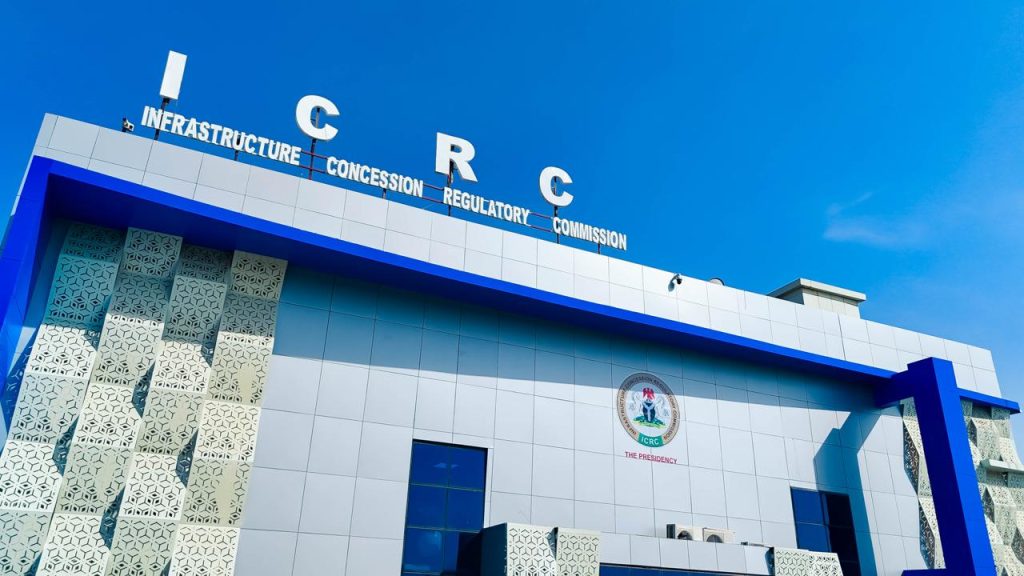
Visit Our Office
ICRC Headquarters, Plot 1270, Ayangba Street, Area 11, Garki, Abuja.
- Mon–Fri · 8:00 – 17:00 WAT
SEND A MESSAGE
Smart contact form
Your enquiry is routed automatically to the right department.
location
Our Headquarters
OFFICE ADDRESS
Plot 1270, Ayangba Street, Area 11, Garki, Abuja.
info@icrc.gov.ng
WEBSITE
www.icrc.gov.ng
OFFICE HOURS
Mon – Fri · 8:00 – 17:00 WAT
ANSWERS
Frequently Asked Questions
A Public-Private Partnership is a contractual arrangement between a Public Entity (Federal, State, or Local) and a private sector entity for the delivery of an infrastructure project or service. These entities (Public and Private) share risks, rewards and losses in delivering the infrastructure/services for public use.
Infrastructure refers to the basic physical and organisational structures and facilities such as buildings, roads and power supply, needed for the operation of a society or enterprise.
Governments adopt PPPs to mobilise private finance, expertise, and innovation, bridge infrastructure gaps, improve service delivery, and reduce the immediate fiscal burden on public budgets.
Public-Private Partnership (PPP) is a form of procurement and a mechanism used by the Government to leverage private sector capital and expertise to deliver public infrastructure and services. The Private entity is rewarded through payment for the use of the infrastructure, either directly by the user (user pays PPP) or by the government (government pays PPP).
An Outline Business Case (OBC) is a preliminary document that establishes the need for a project, outlines its scope and parameters, and demonstrates its potential value for money and bankability to stakeholders. It provides the necessary information for a public authority to decide whether to proceed with the PPP project, ensuring the project aligns with strategic policy objectives, and assessing alternative options before significant investment.
The Full Business Case (FBC) is a comprehensive document that serves as the final justification for a project before awarding a contract and committing financing. It includes all the necessary information required for a public sector entity to secure approval, leading to the commercial and financial close of a Public-Private Partnership (PPP) project. The FBC is prepared after a preferred bidder has been selected and due diligence and negotiations have been completed.
In a Public-Private Partnership (PPP) project, Commercial Close is the stage where all key commercial agreements between the public authority and the private partner are finalized and signed.
It typically occurs before Financial Close.
In a Public-Private Partnership (PPP), Financial Close is the point at which the project has secured all required financing and all conditions precedent to the disbursement of funds have been satisfied.
An SPV is a legal entity incorporated by the private partner (or consortium) to undertake a specific business activity or project. The SPV aims to ring-fence project risks, enhance governance and accountability, and ensure revenue management in line with PPP best practices.
The term ‘bankable’ refers to a project or proposal being able to generate revenues sufficient to repay debt and satisfy the investor’s financial expectations.
Solicited proposals are Public Private Partnership (PPP) projects which are conceptualised/initiated by the Public Entity (Ministries, Departments and Agencies of Government). Unsolicited proposals, on the other hand, are usually initiated by the private investor and submitted to the relevant MDA for partnership in executing the proposal.
In the Public-Private Partnership (PPP) project, the private sector party deploys its resources (capital, skills and time) to the delivery of the Public Infrastructure or Services for a return in the form of profit. Under Traditional Procurement, the Government provides the financing for the execution of the project.
PPP and Privatisation are both forms of private sector participation in infrastructure service delivery. However, in PPPs the public sector retains underlying ownership of the asset and accountability for service delivery, while physical asset provision and service delivery is provided by the private sector in line with the PPP agreement. Risks and rewards in a PPP are allocated and shared in line with the PPP contract between the public and private sectors.
Privatization refers to the partial or full divestiture of government ownership of an asset. Thereafter asset maintenance and service are determined and provided by the new private owners. No risks and rewards are shared between the public and private sectors in privatization. The new private owners carry risks and rewards conferred by their full or partial ownership of the asset.
PPP projects can be undertaken in any public infrastructure service delivery sector, including but not limited to power generation, roads and bridges, ports, airports, railways, inland container depots, solid waste management, water supply/treatment and distribution systems, housing, and healthcare facilities.
The ICRC Act 2005 provides the needed assurance to private investors in section 11, which provides that “No Agreement reached in respect of this Act shall be arbitrarily suspended, stopped, cancelled or changed except in accordance with the provisions of this Act.
A financial model is important in a business case because it translates the project’s assumptions and proposals into measurable financial projections. It is used to assess the financial viability and affordability of the project by estimating costs, revenues, financing requirements, cash flows, and expected returns. The model also helps to test different assumptions and scenarios, determine whether the project is bankable and sustainable, and support decision-making on whether the project should proceed.
VfM assessment determines the optimal combination of quality, cost, risk allocation, and service delivery over the life of a project, compared to public procurement. It is not just about the cheapest price, but about delivering the best possible outcome for the public party and end users.
A Viability Gap Fund (VGF) is a government mechanism to provide targeted financial support for PPP projects that are economically and socially desirable but financially unviable on their own, thereby enhancing bankability, ensuring affordability, and attracting private sector participation.
Risks are allocated to the party best able to manage and mitigate them at an optimal cost. Risks can therefore be retained, transferred, or shared between the parties.
Governments may provide enabling policies, guarantees, subsidies, and oversight. Their role is to ensure affordability, transparency, and protection of the public and private interests.
Lenders assess bankability—enforceable contracts, predictable and sustainable cash flows, robust risk allocation, credible sponsors, and clear repayment mechanisms, etc.
A project is considered financially viable when it can generate sufficient revenues and returns to cover its costs, provide value for money, and sustain itself over its operational life. However, financial viability alone does not guarantee that lenders will provide funding. For a project to be bankable, it must not only be viable but also structured in a way that reassures financiers about repayment certainty, risk allocation, and contractual enforceability.
Sensitivity and scenario analyses are critical tools in PPP financial modelling because they help test the robustness of a project under uncertain conditions. Since PPPs often span decades, assumptions about demand, construction costs, interest rates, exchange rates, and operating expenses may change over time. Sensitivity analysis simulates the effect of altering one variable at a time—such as a drop in demand or a rise in financing costs—on the project’s financial performance. Scenario analysis, on the other hand, considers the combined effect of multiple changes, such as reduced demand coupled with higher interest rates.
Financing refers to the capital expenditure required to construct, deploy, or maintain an infrastructure asset or service. This is typically sourced by the private sector, raising debt and equity finance, while funding is the revenue that accrues from a project. This typically includes government-pays, user-pays and hybrids.
Engaging communities, investors, regulators, etc., early builds trust, reduces conflict, and ensures that PPP projects are socially acceptable and sustainable.
The legal and regulatory frameworks that govern PPP transactions in Nigeria are the ICRC (Establishment, etc.) Act, 2005, the National Policy on Public Private Partnership (N4P), the ICRC Regulations and approved guidelines. These documents are available on the ICRC website: www.icrc.gov.ng
By mobilising private capital and innovation, PPPs deliver infrastructure and services efficiently while integrating environmental and social safeguards to support inclusive and sustainable growth.
Through mechanisms such as performance-based contracts, tariff regulation, service quality benchmarks, public consultation, and government oversight, to ensure affordability and accessibility.
They are typically financed through a mix of equity, debt, and sometimes government support (grants, guarantees, viability gap fund, subsidies, etc.). The private partner arranges financing and recovers costs through user fees or government payments.
PPP contracts usually include safeguards for environmental protection, social inclusion, and community engagement. International frameworks such as Environmental, Social, and Governance (ESG) standards guide compliance.
Renegotiation occurs when unforeseen circumstances such as economic and regulatory changes, refinancing, natural disasters, etc., affect the project. It must be carefully managed to balance public and private interests without undermining transparency and value for money.
Holiday Schedule
Jan 1 · New Year’s Day
May 1 · Workers’ Day
June 12 · Democracy Day
Oct 1 · Independence Day
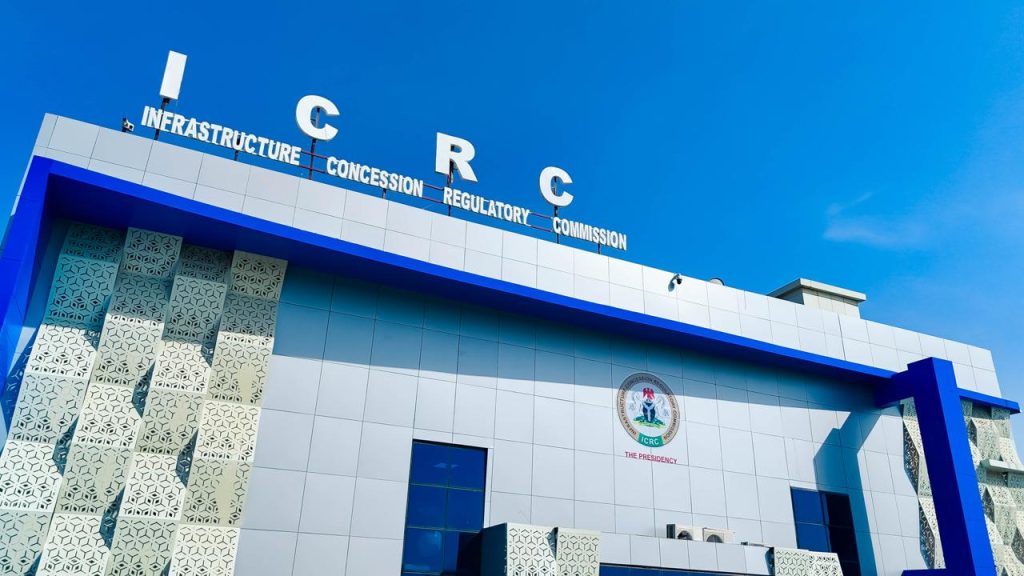
VISIT ICRC
Plan your visit
Everything you need to know before visiting our Abuja headquarters.
Opening Hours
- Mon – Fri · 8:00 – 17:00 WAT
Parking
- On-site parking for visitors
Accessibility
- Fully accessible facilities
Security
- Valid photo ID required
Visitor Guidelines
- Register at the front desk
Let's Build Nigeria's Infrastructure Together
Whether you’re exploring investment opportunities, seeking project information or engaging with the Commission — we’re ready to assist.